Activated Carbon for Odor Control Units
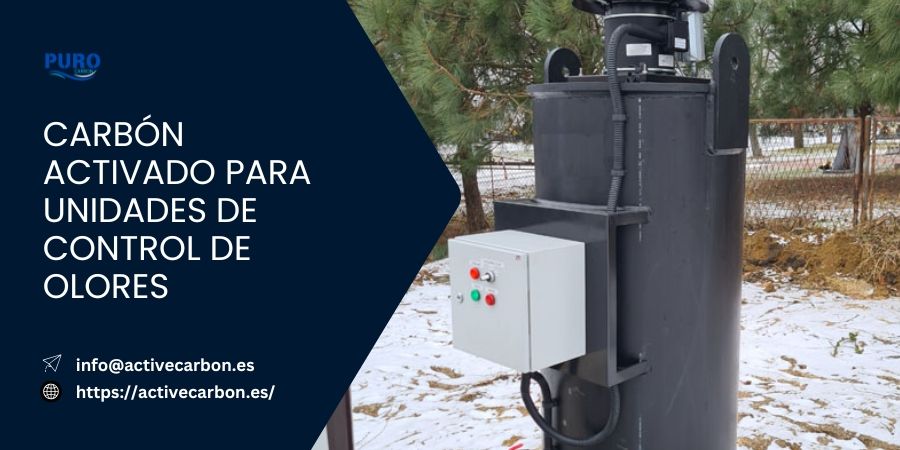
Wastewater systems are crucial infrastructure in any modern community, but they frequently generate unpleasant odors due to gases such as hydrogen sulfide and other volatile compounds, affecting the environment and corroding equipment.
Odor control units have become an essential component in modern wastewater management, especially at remote pump stations and manholes. Activated carbon, thanks to its high adsorption capacity, plays a fundamental role in these units.
This article will explore the applications of activated carbon in odor control units, helping you find reliable odor control solutions.
What are odor control units?
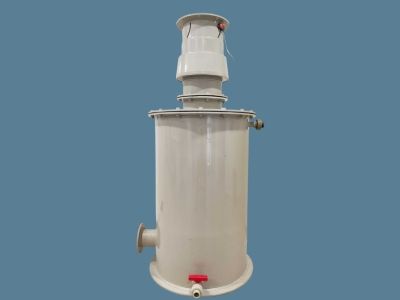
Odor control units are systems specifically designed to eliminate odors in small pump stations and manholes, places where continuous power supply may be problematic or economically unviable. Unlike active devices, these units take advantage of natural ventilation and changes in the water level of the pump station to operate efficiently.
The principle of operation of these units is relatively simple: when the water level rises in the pumping station or inspection well, air is naturally expelled through the control unit. This air, which contains odorous compounds, passes through a layer of specially selected activated carbon, which absorbs and neutralizes harmful gases before releasing them into the environment.
A typical odor control unit can handle airflows from 100 m³/hour to 600 m³/hour, making them ideal for small and medium-sized facilities. Their operational simplicity, coupled with the absence of electrical or hydraulic requirements, makes them the preferred choice for remote or hard-to-reach locations.
The key role of activated carbon in odor control units
Working principle and adsorption process

Activated carbon is the core component of odor control units due to its exceptional adsorption performance. Its porous structure and large surface area make it an ideal material for capturing malodorous gas molecules such as hydrogen sulfide, mercaptans, and volatile organic compounds (VOCs).
The adsorption process that occurs on activated carbon is primarily physical: odor molecules, especially hydrogen sulfide (H₂S), are captured in the micropores of the carbon structure by Van der Waals forces. Furthermore, depending on the type of impregnation of the activated carbon, chemical reactions can occur that transform these volatile compounds into odorless substances.
The effectiveness of activated carbon in odor control units is primarily manifested in its ability to eliminate:
- Hydrogen sulfide (H₂S), causing the typical "rotten egg smell"
- Mercaptans and other organic sulfides
- Volatile nitrogen compounds
- Volatile organic acids
- Low molecular weight aldehydes and ketones
Advantages of activated carbon in odor control units
The use of activated carbon in odor control units offers multiple advantages:
- High removal efficiency: Efficiently captures various types of odor molecules.
- Operation without power: Activated carbon works through physical and chemical adsorption, without requiring external energy for the filtration process.
- Low maintenance needs: Requires minimal intervention during its useful life, generally limited to periodic replacement of the filter media.
- Corrosion protection: By capturing corrosive compounds such as H₂S, it protects sewer infrastructure, significantly extending its useful life.
Selecting the best activated carbon for odor control units
In odor control units, activated carbon is the core odor removal material, used to adsorb malodorous gases such as hydrogen sulfide (H₂S), mercaptans and volatile organic compounds (VOCs). According to different application requirements, we mainly offer the following types of activated carbon:
General activated carbon

General Activated Carbon
High-effective adsorption, applicable to a variety of scenes to eliminate odors. Factory direct supply, stable quality, sufficient stock, support customization.
General activated carbon is commonly used in odor control units. It is typically manufactured from raw materials such as coconut shell or charcoal through physical or chemical activation, and relies on its porous structure and large surface area for gas adsorption.
Advantages:
- Microporous structure: Suitable for the adsorption of low molecular weight gases, such as H₂S and some VOCs.
- Physical adsorption: Captures gas molecules using Van der Waals forces, without the need for chemical reactions.
Applications:
- Treatment of pumping stations with moderate concentrations of H₂S.
- Filtration of exhaust air in sewer manholes in wastewater networks.
Impregnated activated carbon

Impregnated activated carbon
Powerful adsorption of gases such as H₂S, NH₃, SO₂, etc., specific for H₂S, NH₃ and SO₂. High efficiency performance, long lifespan, fast delivery.
We offer various types of impregnated activated carbon to improve their specific gas removal capacity. This type of activated carbon is designed for complex and demanding odor control applications.
- Alkaline impregnation (KOH, NaOH): Especially effective in removing acid gases such as H₂S, SO₂ and NOx.
- Impregnation with metal salts (Cu, Zn, Fe): Particularly effective for low molecular weight sulfur compounds.
- Impregnation with phosphoric or citric acid: Aimed at the capture of basic compounds such as ammonia and amines.
Advantages:
- High removal efficiency for specific gases.
- Good performance in humid environments.
- Provides highly specific odor control solutions.
Applications:
- Wastewater treatment networks with high concentrations of H₂S.
- Odor filtration in chemical and fertilizer plants.
- Odor control in high humidity environments.
Catalytic activated carbon

Catalytic activated carbon
Designed for the treatment of high concentrations of H₂S and VOCs. Factory direct sales, technical support, global supply, get your exclusive solution now.
Catalytic activated carbon combines physical adsorption and catalytic action to efficiently decompose and neutralize malodorous gases.
Advantages:
- It can treat high concentrations of H₂S and corrosive gases.
- High durability and long service life.
- Works efficiently even in high humidity conditions.
Applications:
- Wastewater treatment plants with high concentrations of hydrogen sulfide
- Filtration of waste gases in the petrochemical industry.
- Odor control locations with high performance requirements
Conclusion
Activated carbon based odor control units are an economical and effective solution for treating odor emissions in wastewater systems, especially suitable for remote locations or where continuous power supply is problematic.
PuroCarbon S.L., with years of experience in the development, production and sale of activated carbon, we offer professional solutions for odor control units, perfectly adapted to the specific needs of each project.
If you are looking for a reliable activated carbon supplier, Contact us at now to get professional advice and a personalized quote to fit your specific needs.