Complete Guide to Coconut Shell Activated carbon
The Coconut Shell Activated carbon, as a high-performance adsorbent material, plays an increasingly important role in industrial purification and environmental protection. Its unique physical and chemical characteristics make it outstanding in the treatment of various contaminants such as volatile organic compounds (VOCs), heavy metal ions, pigments and odors.
This article will take an in-depth look at the properties of coconut shell activated carbon and its applications in modern industry from multiple perspectives, including raw materials, engineering applications, and economic benefits.
Characteristics of the Raw Material and Preparation Process
The excellent performance of coconut shell activated carbon comes from the unique characteristics of its raw material and advanced preparation processes. Understanding this basic knowledge is crucial for the correct selection and application of the product.
Advantages of Raw Material
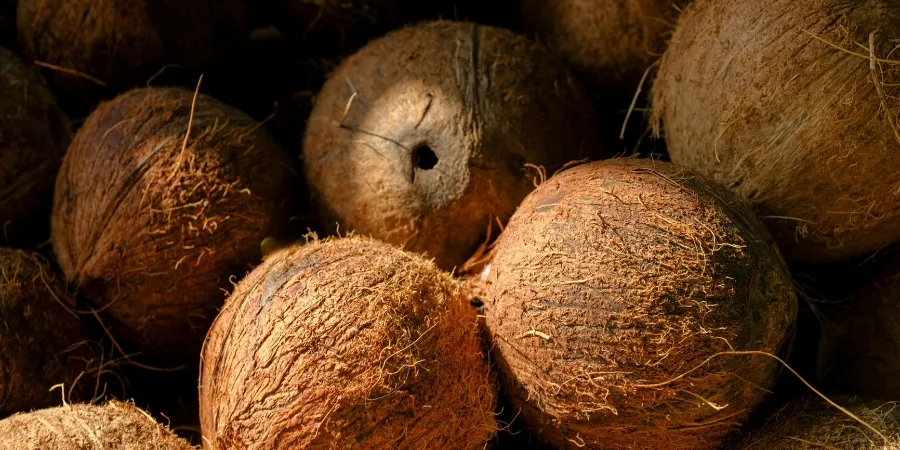
Coconut shell as raw material has unique advantages:
- High cellulose content (45-50%)
- Moderate lignin content (35-45%)
- Low ash content (<3%)
- High density and hardness
- Renewable and ecological resource
Preparation process
Coconut shell activated carbon is produced through a series of processes:
Pretreatment Phase:
- Washing and selection of raw materials
- Crushing and classification
- Drying treatment (humidity control below 10%)
Carbonization process:
- Temperature range: 400-600°C
- Nitrogen protective atmosphere
- Retention time: 1-2 hours
- Yield: 30-35%
Activation process
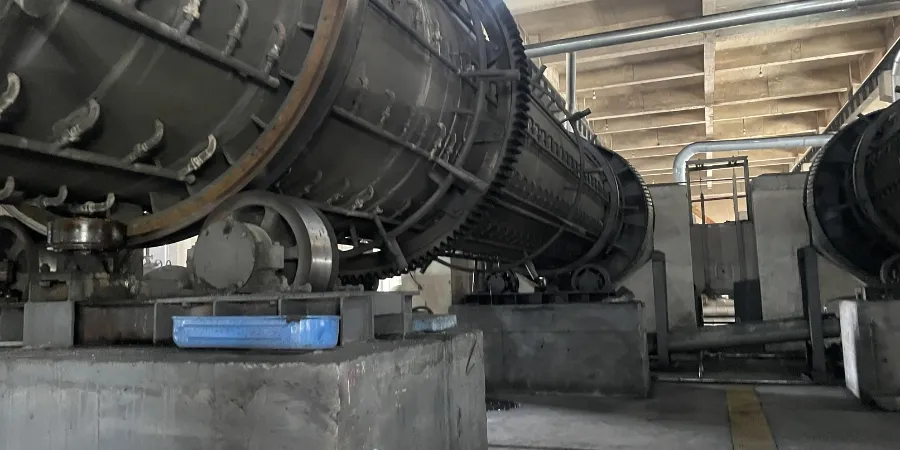
Physical activation:
- Steam activation (750-950°C)
- Activation with carbon dioxide (850-1000 °C)
- Activation duration: 2-4 hours
Chemical activation:
- Common activators: ZnCl₂, H₃PO₄, KOH
- Activation temperature: 450-700°C
- Impregnation ratio: 1:1-1:4
Structural Characteristics and Adsorption Mechanisms
The unique structural characteristics of coconut shell activated carbon derive from the properties of its raw material and its precise manufacturing process. During high temperature activation, the organic substances in the coconut shell gradually decompose, forming a complex three-dimensional network.
This structure not only gives activated carbon exceptional adsorption performance, but also ensures its mechanical strength during use.
Physical Structure
The physical structure of activated carbon determines the upper limit of its adsorption capacity. The multi-level porous structure of coconut shell activated carbon allows pollutant molecules to quickly reach adsorption sites.
Porous structure:
Through test methods such as nitrogen adsorption-desorption, we can clearly observe the pore distribution characteristics of coconut shell activated carbon:
- Micropores (<2nm): represent 75-85% of the total pore volume.
- Mesopores (2-50nm): represent 15-20%.
- Macropores (>50nm): represent 5-10%.
Surface Area Distribution:
The surface area is an important indicator to evaluate the adsorption capacity of activated carbon. The surface area distribution of coconut shell activated carbon presents an obvious hierarchy:
- BET surface area: 1000-1500 m²/g, reflects the total adsorption capacity.
- Micropore surface area: 800-1200 m²/g, determines the actual adsorption capacity.
- External surface area: 100-300 m²/g, influences the initial adsorption rate.
Adsorption Mechanism
Understanding the adsorption mechanism is crucial to optimize process parameters. The adsorption process of coconut shell activated carbon mainly includes two mechanisms: physical adsorption and chemical adsorption.
First, a brief introduction to physical adsorption, which is the main adsorption method and has the following characteristics:
Van der Waals forces:
- Weak interactions between molecules.
- Reversible adsorption process.
- Multilayer adsorption characteristics.
- Non-selective adsorption.
Surface Tension Effect:
- Effect on the solid-liquid interface.
- Capillary condensation phenomenon.
- Reduction of surface energy as a driver.
- Pore filling mechanism.
Chemical adsorption has the following characteristics:
Formation of Chemical Bonds:
- Formation of covalent or ionic bonds.
- Monolayer adsorption.
- Selectivity.
- Irreversible process.
Effect of Superficial Functional Groups:
- Oxygen-containing functional groups.
- Nitrogen functional groups.
- Acidic/basic sites.
- Complexation effect
Performance Indicators and Test Methods of Coconut Shell Activated Carbon
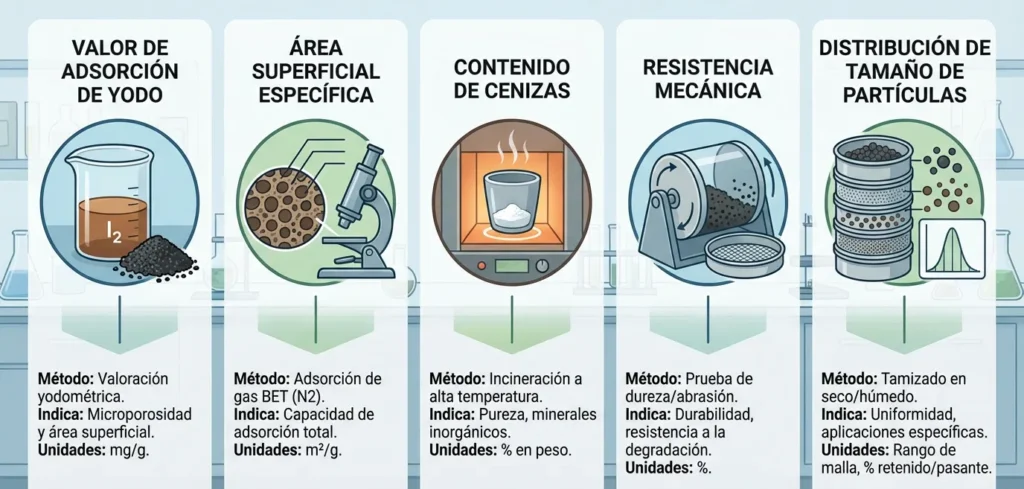
Coconut shell activated carbon is a high-performance adsorbent material whose common parameters are mainly used to evaluate its adsorption capacity, physical and chemical characteristics. These parameters are fundamental for the selection and use of coconut shell activated carbon, detailed below:
Iodine Adsorption Value
The iodine adsorption value indicates the ability of coconut shell activated carbon to adsorb small molecules, reflecting the development of its microporous structure. This indicator is a key parameter to evaluate the quality of activated carbon. It generally ranges between 800-1200 mg/g.
Test Method:
- According to the standard GB/T 12496.8-2015.
- Procedure: An iodine solution is reacted with activated carbon and, by measuring the residual concentration of iodine in the solution, the amount of iodine adsorbed per unit mass of activated carbon is calculated.
Specific surface area
The specific surface area represents the total surface area per unit mass of the activated carbon and is generally proportional to its adsorption capacity. It is usually between 800-1500 m²/g.
Test Method:
- It uses the BET (Brunauer-Emmett-Teller) method.
- Procedure: Through a nitrogen adsorbiometer, the amount of nitrogen adsorbed on the surface of the activated carbon is measured and the specific surface area is calculated.
ash content
The ash content indicates the amount of inorganic residues in the activated carbon. A high ash content reduces its adsorption capacity. Coconut shell activated carbon has a low ash content, generally <3%.
Test Method:
- According to the standard GB/T 12496.3-2015.
- Procedure: Activated carbon is calcined at high temperatures (800-850°C) and the percentage by weight of residual ash is determined.
Mechanical resistance
Mechanical strength indicates the physical properties of activated carbon, reflecting its ability to resist pressure and wear. Greater resistance prolongs its useful life. Coconut shell activated carbon has high hardness, generally >98%.
Test Method:
- According to the standard GB/T 12496.6-2015.
- Procedure: Drum or vibration method is used to measure the breakage rate of the sample under mechanical stress.
Particle Size Distribution
The particle size distribution indicates the variation in the size of activated carbon granules, which affects the flow resistance and adsorption efficiency. The specific size depends on the application requirements, such as 4-8 meshes or 8-12 meshes, etc.
Test Method:
- According to the standard GB/T 12496.2-2015.
- Procedure: The sample is sieved using standard sieves and the mass percentage of the sample in each particle size range is calculated.
Coconut shell activated carbon application
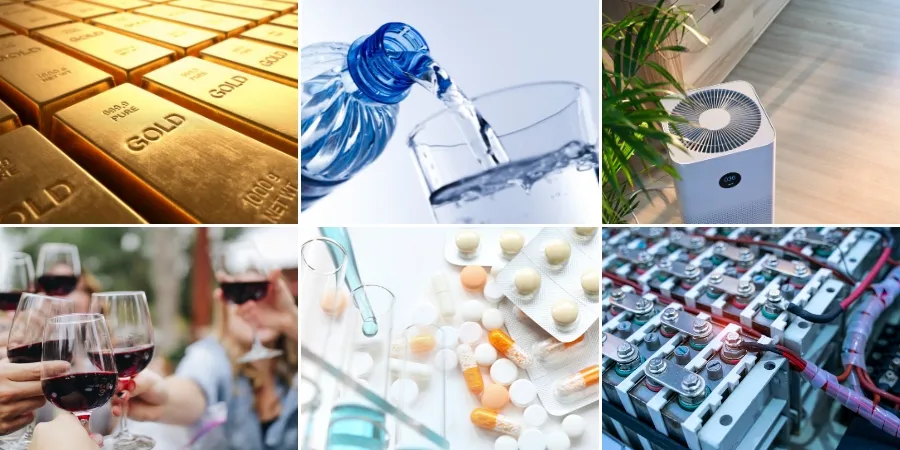
Coconut shell activated carbon, thanks to its high surface area, developed microporous structure and excellent adsorption capacity, finds applications in multiple industries.
Gold Recovery
Its highly developed microporous structure makes it especially suitable for adsorbing gold ions in gold-bearing solutions. Its high mechanical resistance and low wear rate allow multiple cycles of use without fragmentation.
Specific applications:
- In gold extraction processes (such as cyanidation), it adsorbs and recovers gold ions from gold cyanide solutions.
- Used in CIP (Carbon in Pulp), CIL (Carbon Leaching) and CIC (Carbon Columns) processes.
Advantages:
- High adsorption capacity with high recovery rate
- Excellent mechanical resistance for regeneration and reuse
- Low ash and high purity
- High K and R values
Water treatment
Its powerful adsorbent capacity allows it to effectively remove impurities, odors, color and contaminants from water. Micropores adsorb small organic molecules, while mesopores capture larger molecules.
Drinking water purification:
- Eliminates residual chlorine, odors, color and traces of organic contaminants
- Used in home purifiers and commercial systems
Wastewater treatment:
- Adsorption of heavy metals, organic compounds (benzene, phenols) and other pollutants in industrial effluents
Industrial water treatment:
- Production of ultrapure water for electronic and chemical industries
Advantages:
- Effective removal of suspended and dissolved contaminants
- Chemical stability without risk of secondary contamination
- Good regeneration capacity for reuse
air purification
It demonstrates extraordinary performance in adsorption of VOCs (Volatile Organic Compounds), with notable effectiveness in eliminating harmful gases and odors.
Home applications:
- Adsorption of formaldehyde, benzene, ammonia, SO₂, smoke and bad odors indoors
- Incorporated in air purifiers and activated carbon bags
Industrial emissions treatment:
- Removal of aromatic compounds (benzene, toluene, xylenes) and sulfides in exhaust gases
Vehicle purification:
- Filtration systems to eliminate polluting gases and odors in cars
Advantages:
- High adsorption efficiency and speed
- Broad spectrum of treatable gases, with total safety
- Possibility of thermal regeneration to reduce costs
Food and Beverage Industry
Due to its food safety and excellent adsorbent capacity, it is ideal for deodorization, decolorization and purification in food processes.
Key applications:
- Sugar decolorization: In refining of sucrose, glucose and fructose
- Oil purification: Elimination of odors, impurities and peroxides in vegetable/animal oils
- Beverage clarification: Treatment of juices, beers and wines to remove colorants and undesirable flavors
- Additive purification: Purity improvement in food ingredients
Benefits:
- Certified for food contact
- Chemical stability and safety of use
- High performance in clarification and deodorization
Pharmaceuticals
Its adsorbent selectivity makes it invaluable for pharmaceutical purification:
- Drug purification: Elimination of impurities in the production of antibiotics, vitamins and hormones
- Packaging of injectables: Removal of pyrogens and trace contaminants
- Oral solutions treatment: Improvement of organoleptic characteristics
Advantages:
- Adsorbent selectivity for specific contaminants
- Compliance with pharmacopeial standards
- Possibility of economic regeneration
Chemical Industry
Key functions in chemical processes:
- Solvent Recovery: Adsorption and recycling of VOCs
- Catalytic supports: Matrix for catalysts in chemical reactions
- Chemical purification: Raw materials refinement
Electronics
Critical applications in high technology:
- Semiconductor manufacturing: Special gas purification
- Battery materials: Electrodes in supercapacitors and lithium batteries
How to Select High Quality Coconut Shell Activated Carbon
Selecting high-quality coconut shell activated carbon is crucial as different application scenarios have specific requirements for product performance. Below are some technical and practical recommendations to help you choose the most suitable activated carbon according to your needs:
Define the application scenarios and your needs
Different applications require specific characteristics in activated carbon. Therefore, before making the purchase, it is important to identify the environment and purpose of use. For example:
- Drinking water purification
It is necessary to choose high-purity activated carbon, with low ash content and uniform particles, to eliminate odors, residual chlorine, pesticides and organic contaminants, while avoiding secondary pollution. - Industrial wastewater treatment
In this case, the ability to adsorb large molecule contaminants (such as dyes and oils) is more important. A product with a wide pore distribution and a high methylene blue adsorption value is recommended. - Air purification
For the adsorption of volatile organic compounds (VOCs) such as formaldehyde and benzene, an activated carbon with a developed micropore structure and a high CTC value should be chosen. - Food and pharmaceutical processing
It is essential to ensure the purity and safety of activated carbon. Products that have food or pharmaceutical grade certifications should be chosen to meet requirements such as decolorization, refining, or removal of impurities.
Clearly defining specific needs can narrow the range of options and avoid poor performance due to incompatible parameters.
Attention to key technical parameters
Depending on the usage requirements, evaluate the following technical parameters:
- Specific surface area:This is a key indicator of adsorption capacity. In general, a larger surface area means better adsorption. However, different applications require different pore distributions (micropores, mesopores, and macropores), and prioritizing surface area alone could lead to an inappropriate choice.
- Iodine adsorption value:If the goal is to remove small molecule contaminants in water (such as residual chlorine and dissolved organic matter), the iodine adsorption value should be greater than 1000 mg/g.
- CTC adsorption value:Evaluates the adsorption capacity of volatile organic compounds in the gaseous state. It is suitable for air purification or waste gas treatment. The higher the CTC value, the better the adsorption performance; A value greater than 60% is recommended.
- Ash content:High ash content reduces adsorption efficiency. In applications requiring high purity (such as drinking water treatment or food processing), an ash content of less than 3% is recommended.
Selection of specific parameters should be based on the nature and concentration of the target contaminants, ensuring that performance aligns with application needs.
Choose the right shape and size
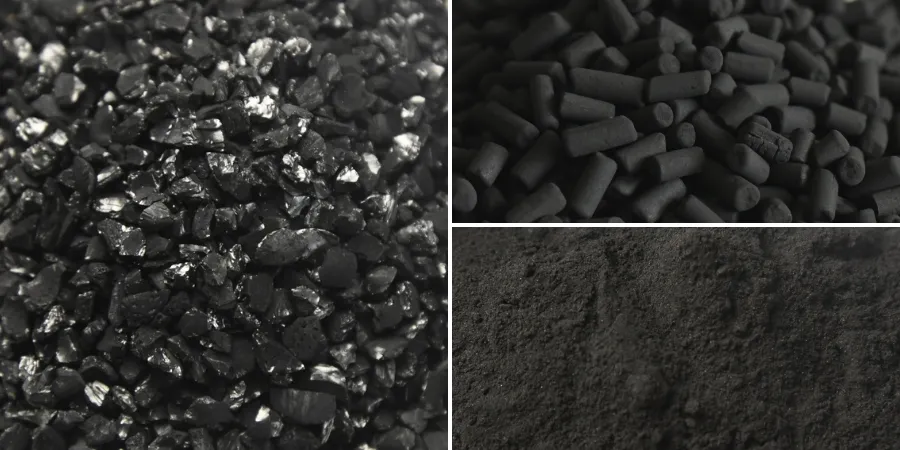
Coconut shell activated carbon comes in various shapes and sizes, such as granular, powder, and pellet (cylindrical) form. Each shape is suitable for different equipment and processes:
- Granular activated carbon
Ideal for fluidized bed or fixed bed systems, commonly used in water treatment and air filtration. Its larger particle size helps reduce flow resistance and facilitates regeneration. - Powdered activated carbon
Suitable for rapid treatment scenarios, such as adsorption in a short time in wastewater treatment or liquid decolorization. - Activated carbon Pellets
Widely used in industrial gas treatment equipment. Its regular shape reduces airflow resistance and is ideal for large-scale continuous processes.
When selecting, consider adsorption rate, flow resistance, and equipment compatibility to achieve optimal performance.
Certifications and quality assurance
High-quality coconut shell activated carbon must meet strict quality standards and certifications to ensure stable and safe performance. Listed below are some common certifications and quality assurance measures:
- International certifications
They include certifications such as ISO 9001 (quality management), NSF certification (safety for drinking water), and FDA certification (food and pharmaceutical safety). - Supplier test report
Ask the supplier for product test data, including surface area, iodine adsorption value, CTC value, ash content and other key parameters. - Heavy metal content
Especially in applications related to food, pharmaceuticals or drinking water, ensure that the product meets established standards for heavy metal content.
Consider durability and cost-effectiveness
The economic aspect of activated carbon depends not only on the initial purchase cost, but also on its service life, adsorption efficiency and replacement frequency. Here are some key points to keep in mind:
- Hardness and wear resistance
High hardness activated carbon generates less dust or broken particles during transportation and use, which increases its durability. - Regeneration capacity
If the use allows for regeneration of activated carbon (such as in industrial water treatment), choose products with low loss during regeneration to reduce long-term costs. - Comprehensive cost evaluation
All things being equal, performance evaluates lifetime and maintenance costs to select the most cost-effective product.
Choose a reliable supplier or brand
The coconut shell activated carbon market is competitive and product quality can vary considerably. Choosing a reliable supplier is key to guaranteeing product quality and good after-sales service. Quality suppliers usually have the following characteristics:
- They offer full technical support and application-specific solutions.
- They recommend suitable products according to the needs of the industry.
- They have a stable supply capacity, guaranteeing consistency between batches.
PuroCarbon, as a professional activated carbon supplier, is dedicated to offering high-quality coconut shell products and one-stop solutions. Our advantages include:
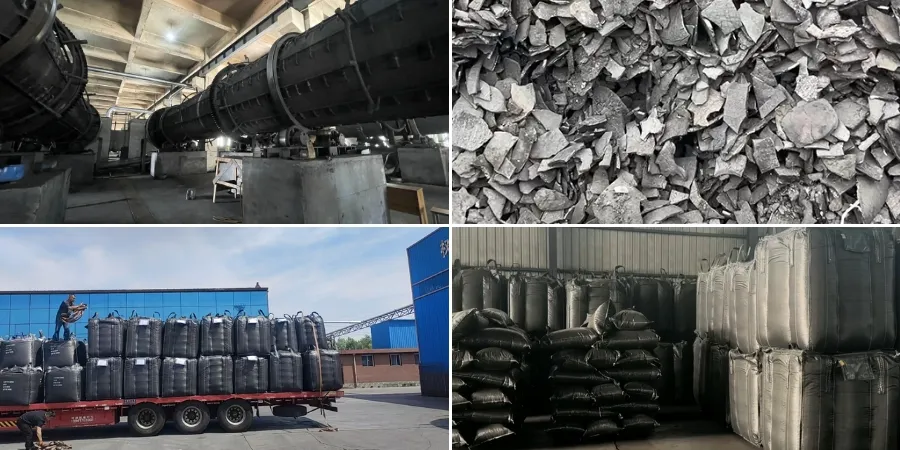
- Professional customization services: We recommend suitable specifications and products based on customers' specific needs (such as water treatment, air purification, food processing, etc.).
- Consistent product quality: PuroCarbon strictly controls production and supply chain management to ensure consistent performance in each batch and meet international standards.
- Technical Support: Our team has extensive industry experience and can offer comprehensive technical support, from product selection to usage optimization.
Conclusion
Coconut shell activated carbon, as a natural, eco-friendly and high-performance adsorption material, is providing quality solutions in areas such as water treatment, air purification and food processing.
Whether in industrial production or daily life, coconut shell activated carbon can play a crucial role. Contact us at now to get free samples and customized solutions.