The 5 Key Factors Influencing the Adsorption Performance of Activated Carbon
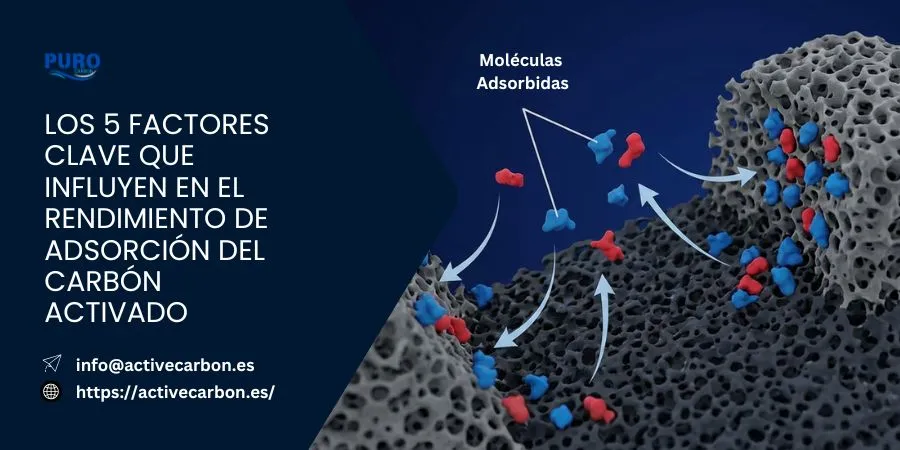
In areas such as water treatment, air purification, waste gas treatment, as well as decolorization and purification, the activated carbon It is widely used thanks to its excellent adsorption capacity. However, many customers find in practice that, Even if it is the same type of activated carbon, the adsorption results can vary considerably.
Actually, the adsorption capacity of activated carbon depends not only on the product itself, but also on the use environment, operating conditions and characteristics of pollutants. Only by fully understanding the key factors that influence its performance is it possible to select, use and replace activated carbon more scientifically, thereby improving treatment efficiency and reducing operating costs.
In this article we will analyze in detail Top 5 factors affecting the adsorption efficiency of activated carbon.
The quality and type of activated carbon
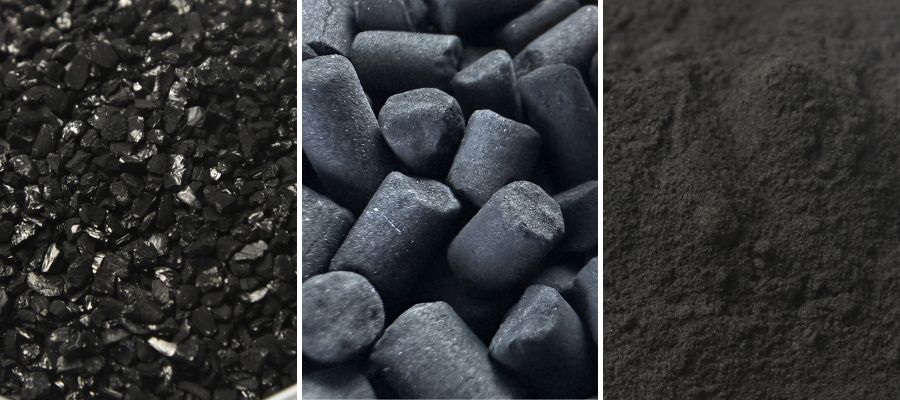
The first factor that influences the adsorption effect is the performance of the activated carbon itself. Activated carbons produced with different raw materials and different processes present obvious differences in their pore structure, their adsorption capacity and their most suitable applications.
The most common types of activated carbon include:
- Coconut shell activated carbon: has a highly developed pore structure, high mechanical strength and few impurities. It is frequently used in drinking water purification, gold recovery and air purification.
- Coal-Based Activated Carbon- It offers good cost-performance ratio and is suitable for the treatment of industrial wastewater, exhaust gases and large-scale environmental projects.
- Wood-based activated carbon- Features good decolorization performance and is widely used in food, pharmaceutical and chemical industries.
In addition, the following parameters of activated carbon also directly affect its adsorption capacity:
- Specific surface area: The larger it is, the more adsorption sites it can offer, generally.
- Pore size structure: The proportion of micropores, mesopores and macropores determines what kind of substances it can adsorb best.
- Iodine value: It is one of the important indicators to measure the adsorption capacity of activated carbon.
- Mechanical resistance: Insufficient strength may cause spraying, which affects the service life and operational stability.
In other words, Choosing the right activated carbon is more important than simply looking for the lowest price. For example, in waste gas treatment projects it is usually more appropriate to use cylindrical activated carbon, while in high-end water purification and filtration, granular coconut shell activated carbon is usually chosen.
The type and concentration of the adsorbed substances

Activated carbon does not have the same adsorption efficiency for all substances. The molecular size, polarity, solubility and concentration of the different contaminants influence the final result.
In general, the following trends are usually observed:
- Organic compounds with the highest molecular weight and highest boiling point They tend to be adsorbed more easily.
- The most hydrophobic organic pollutants They tend to be adsorbed more easily than hydrophilic substances.
- The higher the concentration of the contaminant, the faster the adsorption tends to be in the initial stage, although activated carbon also tends to saturate more quickly.
For example, in the treatment of industrial waste gases, VOCs such as benzene, toluene and xylene are usually relatively easy to adsorb with activated carbon. On the other hand, for certain gases with high polarity or special molecular structures, the adsorption efficiency may be more limited.
In water treatment applications, if the water contains a large amount of suspended solids, oils or organic impurities, these will occupy part of the adsorption sites on the activated carbon surface and reduce the removal efficiency of the target contaminants. Therefore, before using activated carbon, it is usually necessary to carry out adequate pretreatment.
Temperature changes affect adsorption capacity

Temperature is one of the most important external factors influencing the adsorption effect of activated carbon. Under normal conditions, The physical adsorption of activated carbon is an exothermic process, so when the temperature increases, its adsorption capacity usually decreases.
In simple terms:
- At lower temperatures, adsorption is favored.
- At higher temperatures, the adsorbed substances are more easily desorbed from the activated carbon surface, so the adsorption efficiency may decrease.
This is especially evident in waste gas treatment projects. If the gas entering the adsorption equipment has a too high temperature, not only will the adsorption efficiency of activated carbon be reduced, but its saturation will also be accelerated, increasing the replacement frequency and operating costs.
Therefore, in many industrial applications, companies first cool the hot gases before introducing them to the activated carbon adsorption system, in order to ensure more stable performance.
Humidity and water content should not be overlooked
In practice, many customers only pay attention to the pollutant concentration and activated carbon parameters, but overlook the effect of humidity on adsorption. Actually, Excessive humidity can significantly reduce the performance of activated carbon.
The reasons are the following:
- Water vapor can primarily occupy part of the pores and adsorption sites on the surface of the activated carbon.
- A high humidity environment can make it difficult for certain organic gases to enter the microporous structure.
- In water treatment applications, if the raw water contains too many impurities or oils, the normal adsorption of activated carbon will also be affected.
Especially in waste gas treatment, if the gas humidity is too high, the efficiency of activated carbon in adsorbing VOCs usually decreases, and may even cause an increase in bed pressure loss and a reduction in material life.
Therefore, in conditions of high humidity, it is recommended to incorporate, depending on the real situation, pretreatment stages such as dehumidification, condensation and filtration, to improve the effective use of activated carbon.
Contact time and operational process design
No matter how good activated carbon is, if the process design is not appropriate, it will be difficult to achieve the desired adsorption effect. Adsorption with activated carbon is a process that requires time and, Generally, the longer the contact time, the more complete the adsorption..
The main factors influencing contact time include:
- The flow rate of the gas or liquid
- The thickness of the activated carbon layer
- Whether the filling quantity is sufficient
- Whether the team structure is reasonable
- The particle size of activated carbon
If the flow rate is too high, contaminants may pass through the activated carbon layer before being completely adsorbed, reducing treatment efficiency. On the other hand, if the bed design is reasonable and the residence time is sufficient, the adsorption effect can be greatly improved.
For example, in wastewater treatment and gas purification systems, it is often necessary to calculate the appropriate amount of activated carbon and equipment size based on air or water flow rate, contaminant concentration, and emission requirements. This is also the reason why a professional supplier should not only supply products, but also offer selection recommendations and technical support.
How to improve the actual adsorption efficiency of activated carbon?
After understanding these 5 main factors, companies can improve the results of using activated carbon from the following aspects:
Choosing the right type of activated carbon
Select coconut shell, mineral or wood activated carbon, as well as powder, granular or cylindrical, depending on the application, rather than focusing solely on price.
Perform a good pretreatment
Through filtration, dust removal, cooling, dehumidification and other methods, the ineffective occupation of activated carbon adsorption sites can be reduced.
Optimize equipment and operating parameters
Reasonably control the air speed, water speed, residence time and filling amount, avoiding “the problem is not the carbon, but the system design.”
Carry out periodic checks and replace it on time
When activated carbon reaches a certain level of saturation, its effectiveness decreases. If it is not replaced in time, the treatment effect and compliance with emission standards will be directly affected.
Choose an experienced activated carbon supplier
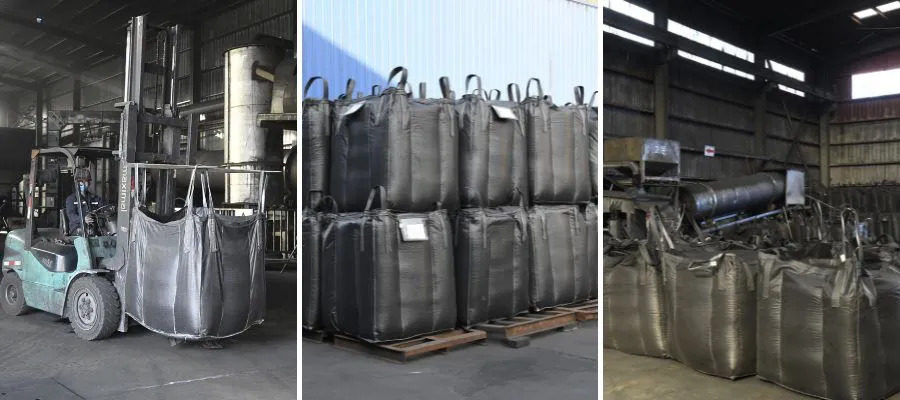
A professional supplier can not only offer products of stable quality, but also recommend more suitable models and usage solutions according to the customer's actual operating conditions.
Conclusion
The adsorption efficiency of activated carbon does not depend on a single factor, but on the interaction of multiple elements, such as product quality, contaminant characteristics, temperature, humidity and process design. For companies, only comprehensive control from selection to application makes it possible to truly take advantage of the adsorbent advantages of activated carbon.
As a professional activated carbon supplier, PuroCarbon can offer most suitable product recommendations and supply solutions depending on your sector, operating conditions and treatment needs. Contact us at now to improve your process efficiency and reduce overall cost.