
Molasses Number: A Key Indicator of Activated Carbon
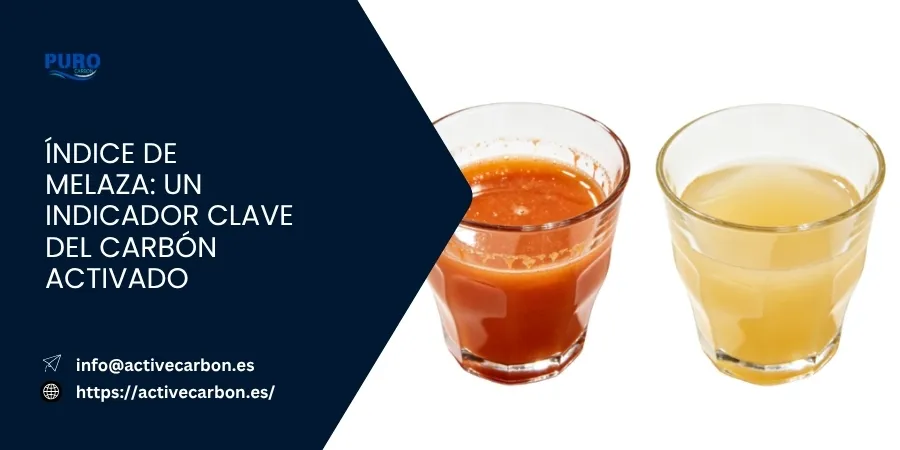
Among the numerous performance indicators of activated carbon, the molasses index It is a fundamental but frequently ignored parameter. For uses requiring decolorization and removal of organic matter from large molecules (such as sugar syrup, food processing, wastewater treatment, etc.), the molasses number is usually more relevant than the iodine number.
This article provides a systematic overview of the definition, principles and testing methods of activated carbon molasses index, as well as its application in practical product selection, in order to help purchasing personnel and engineers choose suitable activated carbon products in a more scientific way.
What is the molasses index?
Molasses index is the main parameter to measure the ability of activated carbon to adsorb large organic matter, and is used to evaluate its efficiency in decolorization and removal of macromolecular impurities.
In summary:
The higher the molasses index, the greater the large molecule adsorption capacity of activated carbon.
It is expressed in percentage (%) or numerical value, and measures the decolorization capacity of activated carbon on a standard molasses solution.
Molasses index adsorption principle
The adsorbent capacity of activated carbon is due to its highly developed porous structure:
- Micropores (<2 nm): adsorb small molecules (e.g. iodine)
- Mesopores (2–50 nm): adsorb medium molecules
- Macropores (>50 nm): adsorb large molecules (pigments, colloids)
Molasses contains a large amount of:
- pigmentary substances
- Colloidal impurities
- Macromolecular organic compounds
Therefore, the molasses index mainly reflects the degree of development of the mesopores and macropores of activated carbon.
Molasses index test method
It is determined through standardized tests with these steps:
- Prepare a standard molasses solution
- Add a defined dose of activated carbon
- Stir and perform adsorption under controlled conditions
- Filter the sample and measure the color change
- Calculate the decolorization rate to obtain the final index
The method is based on comparing the color variation before and after treatment to evaluate the performance of the charcoal.
Differences between molasses index and iodine number
They are two very confusing indicators, but they measure different properties:
| Indicator | Molasses index | Iodine value |
|---|---|---|
| Adsorption object | Macromolecular organic matter | small molecules |
| Porous structure evaluated | Mesopores + Macropores | Micropores |
| Main applications | Decolorization, wastewater treatment | Water treatment, gas adsorption |
| Meaning of value | Higher value = better performance | Higher value = better performance |
Application areas of the molasses index

By measuring the retention of pigments and large contaminants, this indicator is a priority in all industrial processes that require reducing coloration and eliminating macromolecular impurities.
Decolorization in the food industry
- Sugar Syrup Decolorization
- Decolorization of edible oils
- Juice purification
It is mainly used wood-based activated carbon with high molasses index.
Industrial wastewater treatment
- Textile dyeing water
- Chemical wastewater
- Pharmaceutical industry waters
Its main function is to eliminate:
- water coloration
- Chemical Oxygen Demand (COD)
- Large molecule contaminants
Chemical and sugar industry
In sugar plants, activated carbon removes impurities from molasses to improve the purity of the final product.
How to choose activated carbon according to the molasses index
Practical criteria for selection and purchase:
High molasses index (>200)
Ideal for:
- Highly demanding bleaching processes
- Food grade applications
- Fine chemical industry
Medium molasses index (150–200)
Ideal for:
- General industrial wastewater treatment
Low molasses index (<150)
Ideal for:
- Processes with low decolorization requirements
Factors influencing the molasses index
- Raw material (wood > coconut shell > mineral charcoal)
- Activation process
- Pore size distribution
- Particle size (powdered coal has higher values)
Conclusion
The molasses index is an essential indicator to measure the decolorization and adsorption capacity of large molecules of activated carbon, especially in food processing and wastewater treatment.
Key recommendations when selecting activated carbon:
- Do not base the choice only on the iodine number
- Combine both indicators for a complete assessment
- Choose the appropriate porous structure according to each application
Contact us at to receive personalized technical advice and free trial samples.