Activated carbon for Sweeteners
With the continuous development of the food industry, sweeteners are widely used as sugar substitutes in beverages, baked goods and functional foods. To ensure the purity, flavor and safety of sweeteners, production processes typically include refining steps such as decolorization and removal of impurities.
In this context, the activated carbon It has become an essential material in sweetener processing thanks to its excellent adsorption properties.
What is activated carbon?
Activated carbon is a specially treated porous carbon material, which has an extremely high specific surface area and a rich pore structure. These characteristics allow it to efficiently adsorb impurities, organic compounds and pigment molecules present in liquids or gases.
Main functions of activated carbon in sweeteners
In the production and refining process of sweeteners, activated carbon acts as a high-efficiency adsorbent material and plays a fundamental role.
Bleaching action
During the production of sweeteners—such as glucose-fructose syrups, xylitol, erythritol, among others—the raw materials usually contain natural pigments or coloring substances generated during processing. Activated carbon can effectively adsorb these pigments, making the product more transparent and pure, thus improving its visual quality.
Elimination of odors and impurities
Some sweeteners may present slight strange odors or impurities during their production, which affects the final flavor. Activated carbon is capable of adsorbing these organic impurities and volatile substances, thus improving the aromatic profile of the sweetener.
Increased purity
During the refining process, activated carbon can also remove traces of harmful substances, such as heavy metal ions or residual solvents, further improving the safety and purity of the sweetener.
Common application scenarios for activated carbon in sweeteners
In the production processes of different types of sweeteners, activated carbon is widely used in multiple contexts thanks to its outstanding adsorption properties.
Decolorization and refining of fermentation sweeteners
In the production of fermented sweeteners such as erythritol and xylitol, the fermentation broth usually contains large amounts of pigments, proteins and metabolic byproducts. Activated carbon is used for:
- Eliminate yellow or brown pigments generated during fermentation
- Adsorb organic impurities
- Increase solution transparency
Purification of plant-based sweeteners
Natural sweeteners such as steviol glycosides, obtained through plant extraction, usually contain in their original solution:
- Chlorophyll
- Tannins
- Bitter compounds
In this process, activated carbon is mainly used for:
- Remove natural pigments
- Reduce bitterness and astringency
- Improve the purity of sweetness
Continuous decolorization of sweetening syrups
Liquid sweeteners such as glucose-fructose syrup and high fructose syrup are typically processed through continuous processes in industrial production, including:
- The use of adsorption columns with granular activated carbon
- Continuous decolorization and removal of impurities
- Maintaining product stability
Fine treatment of high purity synthetic sweeteners
High added value sweeteners such as aspartame have very high purity requirements. Activated carbon can be used to:
- Eliminate organic waste in trace amounts
- Adsorb odor-causing molecules
- Improve product stability
Quality optimization before and after crystallization
In the crystallization process of sweeteners, activated carbon is commonly used:
- Before crystallization: to remove impurities and improve the quality of the crystal
- After crystallization: to improve the quality of the circulating mother liquor
Types of activated carbon most used in sweeteners
Different sweetener production processes have different requirements for activated carbon, so choosing the right type is essential.
Wood powdered activated carbon
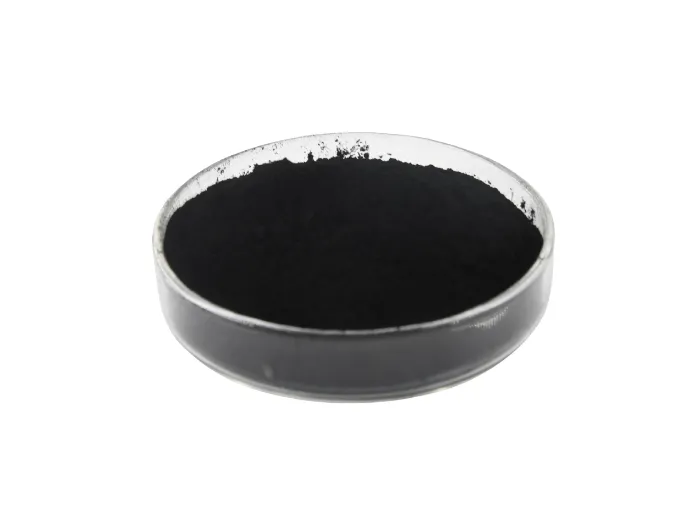
Features:
- Predominantly mesopore pore structure
- High adsorption rate
- Good dispersibility
Application scenarios:
- Erythritol decolorization
- Xylitol refining
- Treatment of high fructose syrups
Advantages:
- High fading capacity
- Relatively low cost
- Easy to dose
Coconut shell activated carbon
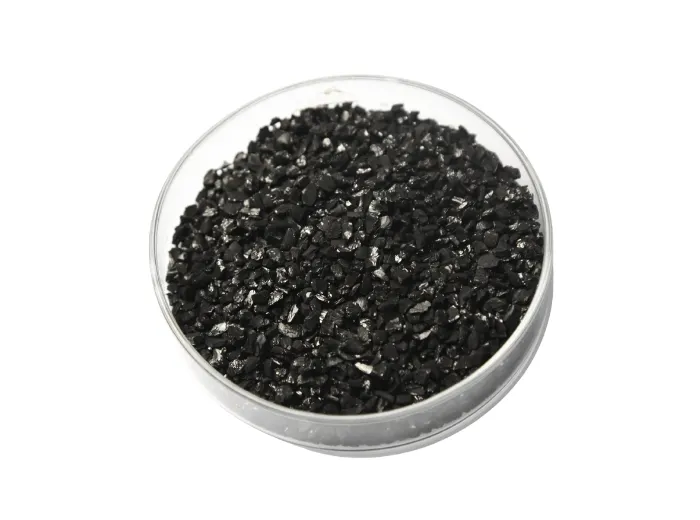
Features:
- Well developed micropores
- High mechanical strength
- Stable adsorption capacity
Application scenarios:
- High purity sweeteners (such as aspartame)
- Fine odor removal processes
Advantages:
- High adsorption capacity of small molecules
- Suitable for continuous processes (in column)
Usage Considerations
Despite the excellent adsorption properties of activated carbon, during its use it is necessary to take into account the following aspects:
- Dosage control- Excessive use may cause loss of active components
- Contact time: it is necessary to control the adsorption time according to the process to obtain optimal results
- Filtration process: after use, activated carbon must be removed by filtration or centrifugation
- Selection of the right type: activated carbons with different pore structures are suitable for substances of different molecular sizes
Conclusion
Activated carbon plays an important role in the production of sweeteners. Through decolorization, odor removal and impurity extraction, it not only improves product quality but also ensures food safety.
Contact us at right now to get free trial samples and customized activated carbon solutions.