Activated carbon for wine decolorization
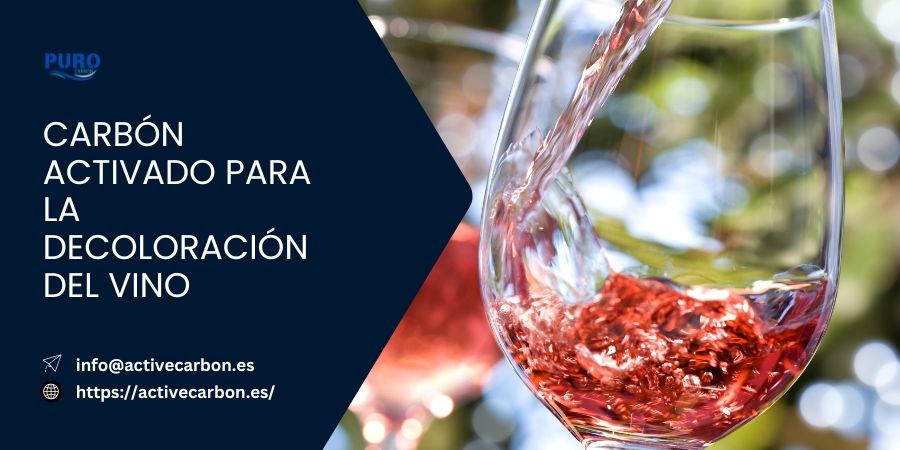
Alcoholic products usually present a dark color and impurities during the production process, which not only affects their appearance, but also affects their taste and quality. To improve the purity and organoleptic quality of the liquor, the decolorization process with activated carbon It is widely used in the production of liqueur, yellow wine, wine, rum and other alcoholic beverages.
In this article, we will explore in depth the application of activated carbon in the decolorization of alcoholic beverages, helping you choose the most suitable activated carbon product according to your needs.
Why Decolorize Wine?

During the fermentation and storage process of alcoholic beverages, certain coloring compounds (such as polyphenols, aldehydes, higher alcohols, among others) can darken the color of the product, generating yellow, brown or cloudy tones. These compounds can come from:
- Natural pigments in raw materials.
- Byproducts generated during fermentation.
- Dissolved substances from the storage container or oxidation products.
These pigments affect the transparency, appearance and taste of the drink. Therefore, carrying out a decolorization treatment is an essential step to guarantee the visual and organoleptic quality of the product.
Principles of bleaching with activated carbon
Activated carbon has a large specific surface area and a developed pore structure, allowing it to remove coloring molecules, unwanted odors and other impurities through physical adsorption and chemical adsorption.
- Physical adsorption: Activated carbon uses its porous structure to trap large molecules, such as pigments and impurities, present in the liquid. As the drink passes through a layer of activated carbon, these molecules adhere to the walls of the pores, thus separating themselves from the liquid.
- Chemical adsorption: It involves the interaction between functional groups on the surface of the activated carbon and certain compounds in the liquid, forming stable compounds that contribute to decolorization.
In the decolorization process of alcoholic beverages, activated carbon generally removes the following components:
- Pigments (such as tannins, polyphenols, caramelized compounds).
- Higher alcohols.
- Substances with unpleasant odors (such as aldehydes and sulfur compounds).
- Metal ions and other trace impurities.
Through this process, the color of the liquid becomes lighter and brighter, also improving its flavor and aroma.
Types of activated carbon ideal for wine decolorization
Choosing the right type of activated carbon is crucial to achieving a good bleaching result. In this context, the following types of activated carbon are the most used:
Wood Powder Activated carbon

Wood Powder Activated carbon
Designed for the wine decolorization process, suitable for food use and with an excellent decolorization effect.
Wood powder activated carbon is manufactured from high-quality wood through a high-temperature carbonization and activation process. It has a well-developed mesoporous structure and is suitable for the adsorption of pigment molecules such as polyphenols and tannins. Its advantages include:
- High fading capacity: It is effective in treating drinks with intense colors, such as rice wine and red wine.
- Fast adsorption: Its powder structure allows good dispersion and high adsorption efficiency.
- Food safety: It is suitable for use in the food, beverage and liquor industries.
- Ease of filtering and sedimentation: Allows simple operation and easy carbon recovery.
Coconut shell activated carbon

Coconut shell activated carbon
Food safety standards, designed for the decolorization and purification of foods and beverages. Stable supply.
This activated carbon in granular and irregular form has high strength and a well-developed micropore structure, making it ideal for the purification of white liquors and high-end beverages. Its features include:
- High adsorption capacity: Effectively removes unwanted odors, trace impurities and some pigments, improving the purity of the liquid.
- Selective adsorption: It has greater selectivity for coloring compounds.
- Food safety: Low amount of ash, few impurities and high purity, meeting food safety standards.
- Suitable for fine filtration: Ideal for the treatment of white spirits, rum and other high-quality drinks.
- Disintegration resistance: Its resistant structure prevents the formation of dust during use.
Conclusion
Thanks to its excellent adsorption properties, activated carbon plays a fundamental role in the purification of alcoholic beverages, helping to improve their quality and safety.
If you are looking for high-quality activated carbon products for alcoholic beverage purification, please feel free to contact us. contact us at. Our team of experts will provide you with customized solutions to help you produce higher quality products.