Activated Carbon for Water Treatment
Water is the source of life, but water pollution is an increasingly serious problem. Industrial wastewater, agricultural runoff and urban wastewater contain numerous harmful substances, such as heavy metals, organic pollutants, pesticide residues and microorganisms, which seriously threaten human health and the environment.
The activated carbon, thanks to its excellent adsorption properties, is widely used in water treatment. This article introduces the applications of activated carbon in water treatment and will help you choose the best quality activated carbon products.
What is activated carbon and what is its role in water treatment?

Activated carbon is a highly porous material, mainly made from coconut shell, bituminous coal or wood. Its internal structure is full of millions of micropores that allow it to effectively adsorb various contaminants.
In the water treatment process, activated carbon acts mainly through two mechanisms:
- Physical adsorption: Pollutant molecules are trapped in the pores of the activated carbon due to intermolecular forces.
- Chemical reaction: Some contaminants react chemically with the surface of the activated carbon, thus improving its removal.
These mechanisms make activated carbon an ideal tool to eliminate the following contaminants:
- Chlorine and disinfection byproducts
- Volatile Organic Compounds (VOC)
- Heavy metals (such as mercury and lead)
- Pesticides and herbicides
- Aromatic hydrocarbons
- Compounds that cause unpleasant odors and flavors
- Emerging micropollutants, such as pharmaceutical waste
Specific applications of activated carbon in water treatment
Activated carbon has proven its versatility and effectiveness in numerous scenarios. water treatment, adapting to different industries and specific needs. It is mainly applied in the following scenarios:
Municipal drinking water treatment

In drinking water treatment plants, activated carbon plays a crucial role:
- Eliminates compounds that cause unpleasant odors and flavors, especially geosmin and 2-methylisoborneol produced by algae
- Reduces trihalomethanes and other byproducts of chlorine disinfection
- Eliminates persistent organic compounds such as pesticides and herbicides
- Control emerging micropollutants such as pharmaceuticals and endocrine disruptors
Industrial wastewater treatment

The wastewater generated by the industry presents complex polluting characteristics that require specific solutions:
- Textile industry: elimination of dyes and organic additives
- Pharmaceutical industry: elimination of active compounds and solvents
- Refinery and petrochemistry: treatment of hydrocarbons and phenols
- Food industry: reduction of COD and organic compounds
In these environments, activated carbon can be implemented as a tertiary treatment or as part of advanced oxidation systems. Its ability to remove recalcitrant contaminants makes it an ideal material for industrial wastewater.
Groundwater treatment and remediation

Groundwater often contains specific contaminants that can be effectively treated with activated carbon:
- Arsenic and heavy metals through specific impregnated carbons
- Perfluoroalkyl substances (PFAS), emerging contaminants of concern
- Chlorinated solvents from historical industrial activities
- Hydrocarbons leaked from underground storage tanks
Aquarium water purification
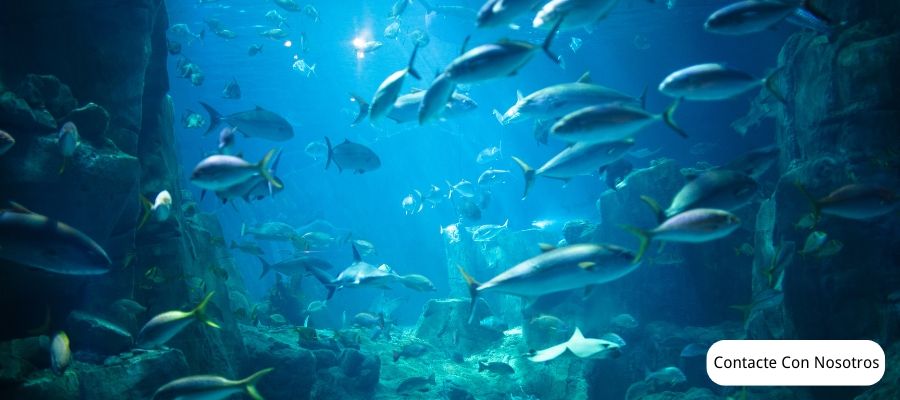
Contaminants commonly found in aquarium water can be effectively removed by activated carbon to keep the water clear and healthy:
- Removal of organic contaminants such as fish excrement, food waste, etc.
- Removal of chlorine and chloramine disinfection byproducts from water
- Removes odor molecules from water
- Adsorption of heavy metal ions
Water treatment in the food and beverage industry

This industry requires especially high water quality standards:
- Elimination of odor-causing substances such as chlorine, chloramines, hydrogen sulfide
- Removal of organic contaminants such as pesticides and industrial solvents
- Removal of heavy metal ions such as lead, mercury and cadmium
- Maintaining water quality stability
High purity activated carbons developed for food applications ensure that no additional contaminants are introduced into the final product.
Types of activated carbon used in water treatment
Choosing the right type of activated carbon is crucial to ensuring water treatment efficiency, as each type has characteristics that make it more suitable for specific applications. We offer several types of activated carbon for water treatment:
Granular activated carbon

Granular activated carbon
We offer customized granular activated carbon products based on your water treatment needs and support bulk purchasing.
Granular activated carbon is the most commonly used form in large scale water filtration systems. With particle sizes between 0.2 and 5 millimeters, it offers an optimal balance between contact area and flow capacity. Its main advantages include:
- Strong adsorption capacity to remove organic contaminants, residual chlorine, odors and heavy metals from water
- High mechanical resistance and long useful life
- Reduction of pressure loss in filter beds
- Excellent ability to remove dissolved organic compounds
- Ideal for continuous flow systems such as drinking water treatment, wastewater and industrial water purification
- Usable in fixed or fluidized beds, with the possibility of prolonged use and regeneration
Powdered activated carbon

Powdered Activated Carbon
We supply activated carbon powder in various specifications, offer factory price and timely delivery.
With smaller particle size, generally between 10-50 microns, it offers large specific surface area and fast adsorption rate. Its advantages include:
- Suitable for short-term water treatments, such as emergency treatments or water quality control for seasonal pollution
- Fast adsorption kinetics, capable of removing contaminants from water in a short time
- Good dispersion and uniform distribution in water bodies, increasing adsorption efficiency
Powdered activated carbon is added directly to water and subsequently requires sedimentation or filtration processes to separate it. In water treatment plants, it is especially useful for removing flavors, odors or seasonal contaminants such as algae or its toxins.
Impregnated activated carbon

Impregnated activated carbon
A wide range of impregnation types can be customized, designed for the removal of specific contaminants, with guaranteed product quality.
Impregnated activated carbon is modified by adding specific chemicals (such as silver, copper oxide, phosphoric acid, etc.).
- Charcoal impregnated with silver: provides antibacterial properties
- Acid-impregnated carbon: improves heavy metal removal capacity
- Alkali treated coal: improves the removal capacity of H₂S and acidic compounds
Its features include:
- Higher adsorption capacity for specific contaminants
- Large specific surface area, optimized pore structure and high adsorption capacity
- Good chemical and thermal stability
- High mechanical strength, resistance to fragmentation and ease of regeneration
Key factors for selecting the best activated carbon for water treatment

The effectiveness of water treatment systems based on activated carbon depends mainly on the proper selection of the material. This decision must be based on multiple technical and operational factors that will determine the performance and economic efficiency of the process.
Physicochemical characteristics of the water to be treated
Before selecting activated carbon, a complete water analysis must be performed:
- pH: determines the surface charge of the carbon, directly affecting its adsorption capacity. Activated carbon generally works most effectively in the pH range 4-10.
- Temperature: influences adsorption kinetics. Generally, lower temperatures favor the adsorption of organic compounds.
- Turbidity and suspended solids: can block the pores of the coal, reducing its useful life. For waters with high turbidity, pretreatment or use of activated carbons with more developed macropores and mesopores is recommended.
- Chemical composition: The presence of certain ions or compounds can compete for adsorption sites, reducing effectiveness for target contaminants.
Characteristics of the contaminants to be removed
Different contaminants require specific pore characteristics in activated carbon:
- Organic micropollutants (pesticides, drugs): require carbons with developed micropores (<2 nm)
- Large molecules (humic acids, dyes): require carbons with more abundant mesopores (2-50 nm)
- Inorganic compounds (heavy metals): benefit from chemically modified or impregnated carbons
- Chlorine and volatile compounds: are effectively adsorbed by coconut shell carbons with high microporosity
The pore size distribution of the activated carbon must match the molecular size of the priority contaminants to maximize the adsorption capacity.
Treatment System Operational Considerations
The system design imposes specific requirements for activated carbon:
- Flow rate: determines the contact time. High flows require carbons with good adsorption kinetics and low pressure loss.
- System pressure: affects the required mechanical strength of the activated carbon. Pressure systems require high hardness carbons.
- Planned regeneration method: If thermal regeneration is planned, bituminous-based coals with good abrasion resistance are preferred.
- Backwash Frequency: Coconut shell carbons are most popular for their hardness and resistance to fragmentation.
Relevant technical specifications
The technical parameters to evaluate include:
- Iodine value: indicator of microporosity, crucial for the adsorption of small molecules.
- Molasses index: reflects the ability to adsorb large molecules.
- Specific surface area: quantifies the surface available for adsorption.
- Bulk density: influences required bed volume and space requirements.
- Ash content: relevant for purity sensitive applications.
- Hardness: critical for systems with backwash or regeneration.
At PuroCarbon, our technical team performs specific laboratory tests for each application, ensuring personalized solutions that maximize treatment efficiency for each client.
Conclusion
Activated carbon, thanks to its efficient and economical ability to eliminate contaminants, has become an indispensable solution in water treatment. Its versatility makes it an ideal choice for both domestic and complex industrial applications.
If you are looking for a reliable activated carbon supplier, PuroCarbon S.L. offers a variety of products that meet your needs. Don't hesitate to contact us at for more information or personalized quotes.