Activated Carbon Wastewater Treatment
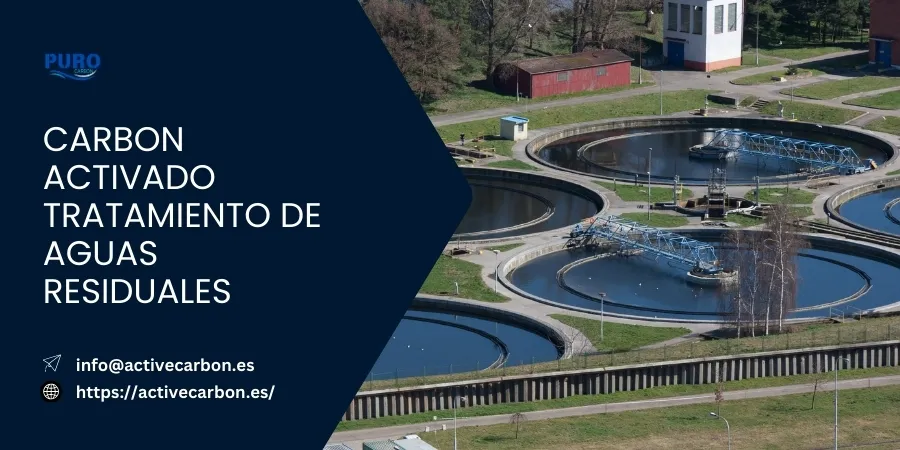
In industries such as chemical manufacturing, pharmaceuticals, textile dyeing and food processing, wastewater treatment is a critical environmental protection measure. Activated carbon, with its highly developed pore structure and exceptional adsorption properties, has become a vital material for improving treatment efficiency and mitigating spill risks.
This article explores the application of activated carbon in wastewater treatment, helping you select the most suitable product.
The role of activated carbon in wastewater treatment

Activated carbon removes contaminants from water through its highly porous structure, which makes it especially useful in process stages where toxic or difficult-to-biodegrade substances need to be removed.
Its main functions include:
- Reduction of COD (Chemical Oxygen Demand) and BOD (Biological Oxygen Demand).
- Elimination of organic compounds that are difficult to degrade.
- Adsorption of oils, phenols, pesticides and dyes.
- Elimination of micropollutants (drugs, hormones, PFAS, etc.).
- Elimination of unpleasant odors and flavors.
- Improving water quality in tertiary treatment to meet discharge standards.
Thus, activated carbon is widely used in both industrial and municipal wastewater treatment plants.
Principles of operation of activated carbon in wastewater treatment
Activated carbon removes contaminants from water primarily through physical and chemical adsorption processes, allowing it to effectively treat a wide variety of harmful substances.
Physical adsorption
Physical adsorption is one of the key mechanisms. Thanks to its enormous surface area and porous structure, activated carbon provides multiple adsorption points. These porosities capture contaminants dissolved in the water through Van der Waals forces, in particular:
- Organic compounds (such as phenols, pesticides and solvents).
- Dissolved organic matter (DOM), such as volatile organic compounds (VOCs) and humic acids.
- Chlorine and its disinfection byproducts (such as trialomethanes).
Chemical adsorption
Chemical adsorption involves reactions between contaminants and functional groups on the activated carbon surface. These functional groups (carboxyls, hydroxyls, carbonyls, etc.) can form chemical bonds with contaminants that are difficult to remove through physical adsorption, such as:
- Heavy metals (lead, mercury, arsenic).
- Acidic or alkaline chemicals.
- Electrically charged ions.
Main applications of activated carbon in wastewater treatment

Activated carbon is widely used to eliminate organic compounds, color, odors and contaminants that are difficult to degrade, being useful in both pretreatment and advanced treatment stages.
Chemical Industry
Chemical effluents are usually complex, with high salinity, toxicity and low biodegradability, making traditional biological treatment difficult. Activated carbon plays an essential role in this wastewater by:
- Eliminate organic compounds that are difficult to degrade.
- Reduce COD.
- Eliminate odors, dyes and surfactants.
Textile and dye industry
Wastewater from the textile industry is characterized by its high coloration, stable compounds and difficulty in degrading, especially when it includes active dyes. Activated carbon is effective for:
- Efficient discoloration.
- Elimination of aromatic compounds and additive residues.
Pharmaceutical Industry
Pharmaceutical wastewater is one of the most complex, as it contains antibiotics, hormones, APIs (active pharmaceutical ingredients), intermediates and other micropollutants that are highly harmful to the environment.
Activated carbon is mainly used for:
- Eliminate drug residues and micropollutants.
- Increase compliance with discharge standards.
- Reduce residual COD after biological treatment.
Food Industry
Wastewater from the food industry contains fats, proteins, pigments, aromas and other natural organic compounds that can cause bad odors and overload biological systems.
Main applications of activated carbon:
- Discoloration and odor removal.
- Elimination of residual organic matter.
- Use in water treatment for reuse.
Advanced Municipal Wastewater Treatment
Water treated in municipal plants contains organic micropollutants (such as drugs, hormones and personal care products) and components that are difficult to degrade. As environmental standards become more stringent, activated carbon has become an important tool in advanced treatment.
Main functions:
- Eliminate organic micropollutants.
- Comply with standards for wastewater reuse.
- Eliminate odors and residual chlorine.
Types of activated carbon for wastewater treatment
Selecting the right activated carbon is crucial for optimal results. The most common types include granular activated carbon, powder and impregnated carbons, each with specific characteristics for different applications.
Granular activated carbon
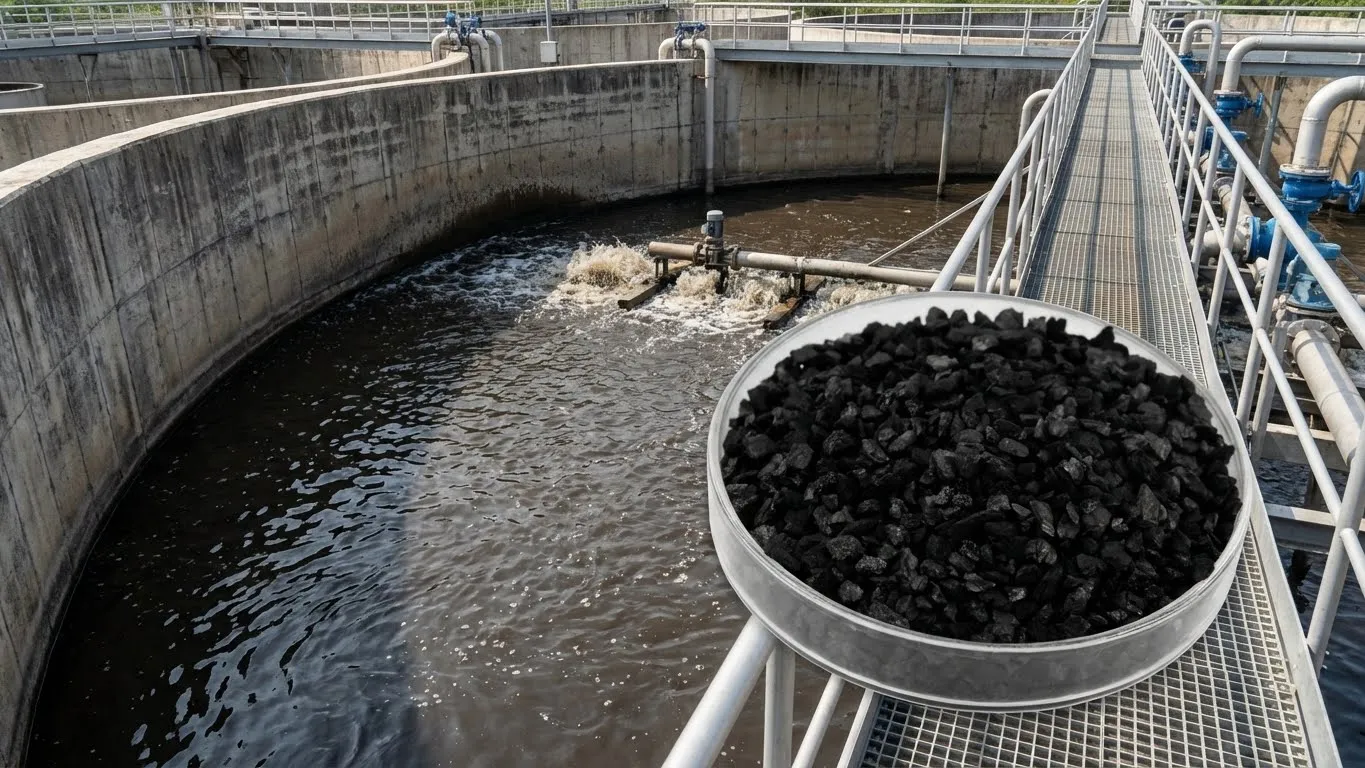
The Granular activated carbon It has a stable particle size, high mechanical strength and can be regenerated, making it ideal for use in continuous filtration systems.
Main features:
- Suitable for advanced treatment and continuous filtration systems, such as biological activated carbon (BAC) filters and fixed bed columns.
- Effective in eliminating COD, organic micropollutants, color, odors and chemical compounds that are difficult to degrade.
- Regenerable, reducing overall costs.
- Ideal for industrial, chemical, textile and municipal wastewater.
Powdered activated carbon

The Powdered activated carbon It has a higher surface area and adsorption rate, making it suitable for processes requiring short contact times or rapid treatments.
Main features:
- Small particle size, allowing rapid adsorption of odors, dyes, micropollutants and pesticide residues.
- Commonly used in dosing systems prior to coagulation and sedimentation to improve responsiveness to sudden contaminations.
- Flexible in use, ideal for temporary, seasonal treatments or as a complement to main processes.
- Used in municipal plants, pharmaceutical effluents and food industry wastewater.
Impregnated activated carbon
The Impregnated activated carbon It contains specific chemical reagents (such as iodine, sulfur, potassium, iron, etc.) in its pores to adsorb or catalyze the removal of specific contaminants.
Main features:
- High efficiency in the removal of heavy metals (such as mercury, chromium, arsenic), sulfur compounds and ammonia.
- Applied in wastewater of electronic industry, electroplating, and in hazardous wastewater with high treatment requirements.
- It combines adsorption and chemical reaction mechanisms, ideal for demanding applications.
Conclusion
Activated carbon is an indispensable material in wastewater treatment, providing efficient and sustainable solutions for the removal of contaminants. In PuroCarbon S.L., we offer a wide variety of activated carbon types and specifications to meet each customer's needs.
Do you want to optimize your wastewater treatment system? Do not hesitate to contact Contact our team of experts for technical support or a personalized quote.