How to Choose Activated Carbon for the Food Industry
In food production processes, activated carbon is widely used for decolorization, odor removal, purification, and impurity removal, such as in sugar syrup refining, beverage treatment, and edible oil decolorization. Selecting the right type of activated carbon not only directly affects product quality, but also costs and safety.
In this article, we will detail how to scientifically choose the activated carbon suitable for the food industry.
Identify the Usage Scenario
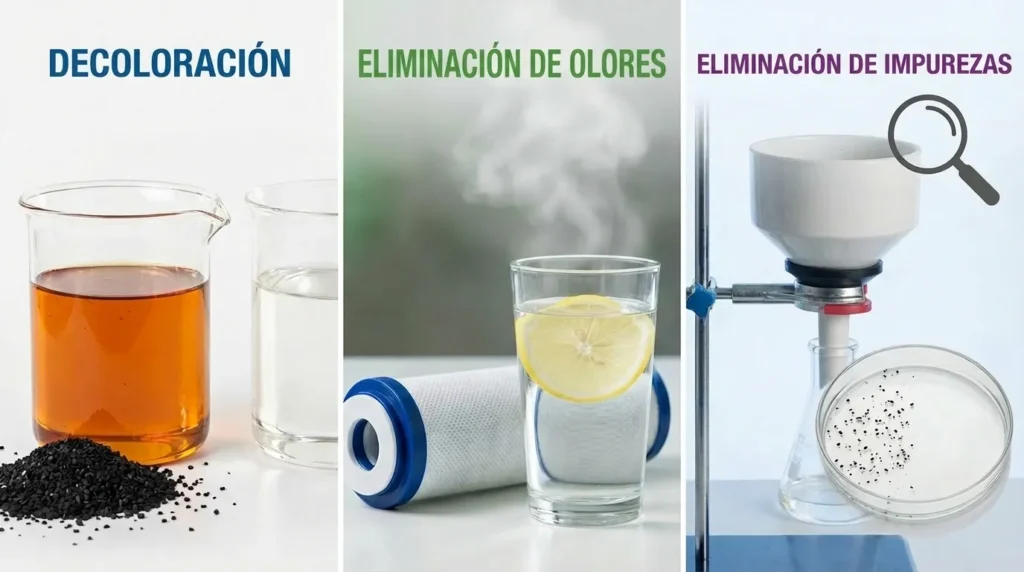
Before selecting an activated carbon, it is essential to identify the usage scenario. In the food industry, activated carbon is commonly used in the following applications:
- Bleaching: For products such as syrups, juices, amino acid solutions and other foods that need to remove coloration.
- Odor elimination: To eliminate unwanted odors in foods or ingredients, commonly applied in beverages, condiments and water treatment.
- Removal of impurities: To filter traces of toxins (such as mycotoxins), heavy metals or organic contaminants.
Since each scenario has different requirements, it is vital to define the specific application as a first step.
Understanding the Basic Parameters of Activated Carbon
The properties of activated carbon are determined mainly by its material and manufacturing process. The following key parameters should be considered when selecting it:
Specific surface area
Specific surface area is a key indicator of the adsorption capacity of activated carbon, measured in m²/g. In the food industry, activated carbon used for decolorization generally has a high specific surface area.
Pore Size Distribution
Activated carbon has three main types of pores:
- Micropores (pore size < 2 nm)
- Mesopores (2–50 nm)
- Macropores (pore size > 50 nm)
Activated carbons used in the food industry must combine micropores and mesopores. Micropores are suitable for absorbing small molecular impurities, while mesopores are ideal for larger molecules, such as pigments or organics.
ash content
The ash content influences the adsorption efficiency and filtration performance. The food industry requires coals with low ash content to avoid secondary contamination in food.
pH
Some activated carbons can alter the pH of the solution in which they are used. Depending on the process, such as sugar refining or beverage decolorization, it is recommended to use neutral or slightly acidic activated carbons to ensure compatibility.
Choose the Right Material
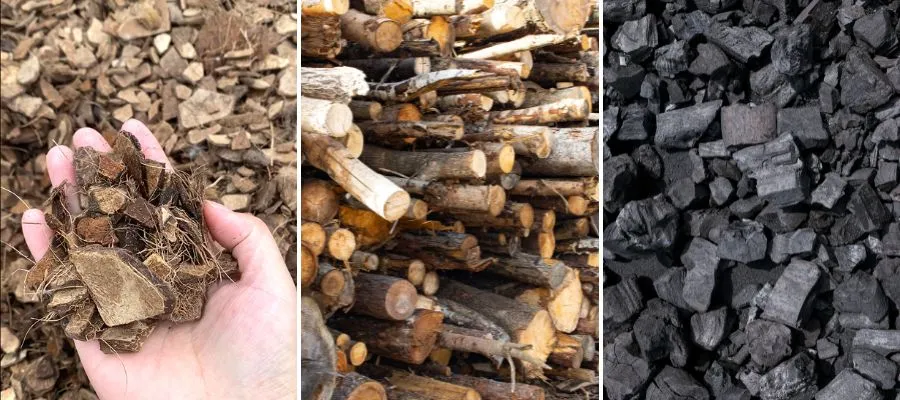
Activated carbon is mainly made from coconut shells, wood and mineral charcoal. Each material has specific characteristics that make it suitable for different food applications:
- Coconut Shell Activated carbon: It has small pores and uniform distribution, as well as a high surface area. It is ideal for high-precision decolorization and impurity removal, such as in sugar refining and drinking water treatment.
- activated carbon based of wood: Mesopores predominate, making it suitable for removing large organic molecules or pigments, such as in decolorizing juices and chemical solutions.
- Coal-Based Activated Carbon: With larger pores and high adsorption capacity, it is mainly used in industrial applications, but its use in food is less common.
Ensure Food Safety
Safety is an essential requirement in the food industry. When choosing an activated carbon, consider these aspects:
Compliance with Food Standards
Make sure the activated carbon meets food safety standards and certifications, such as:
- FDA (US Food and Drug Administration)
- GB2760 (Food additive standards in China)
- Certifications like ISO22000 or HACCP.
Verification of Heavy Metal Content
Food activated carbon must undergo rigorous testing to ensure that levels of heavy metals, such as arsenic, lead and mercury, are well below accepted limits.
Absence of Contaminants
Activated carbon must be completely washed and sieved to avoid the release of impurities or harmful substances in the final product.
Performance Tests and Pilot Trials
Before purchasing large quantities of activated carbon, request samples from the supplier and perform performance tests, for example:
- Adsorption Capacity Tests: Evaluate how well it reduces color or removes specific contaminants in a solution.
- Filtration Rate Tests: Determine if you can process the solution within an efficient time.
- Compatibility Tests: Ensure that activated carbon does not react negatively with the product or interfere with manufacturing processes.
Conducting pilot tests helps to more accurately evaluate whether the product meets the process requirements.
Choose a Quality Supplier
Having an experienced and reputable supplier is crucial. Consider the following aspects:
- Specialization: The supplier must be focused on the supply of activated carbon for the food industry.
- Complete Services: Offer advice, technical support and after-sales service.
- Reliability: Ability to ensure stable supply and high-quality products to meet large-scale demands.
Collaborating with a reliable supplier minimizes risks and facilitates the efficient use of activated carbon.
Conclusion
Activated carbon plays a key role in food production processes thanks to its adsorption capacity. Choosing the right type not only improves product quality but also optimizes production costs.
¡Contact us at now to get free samples and customized solutions!