Decolorization of Edible Oil with Activated Carbon
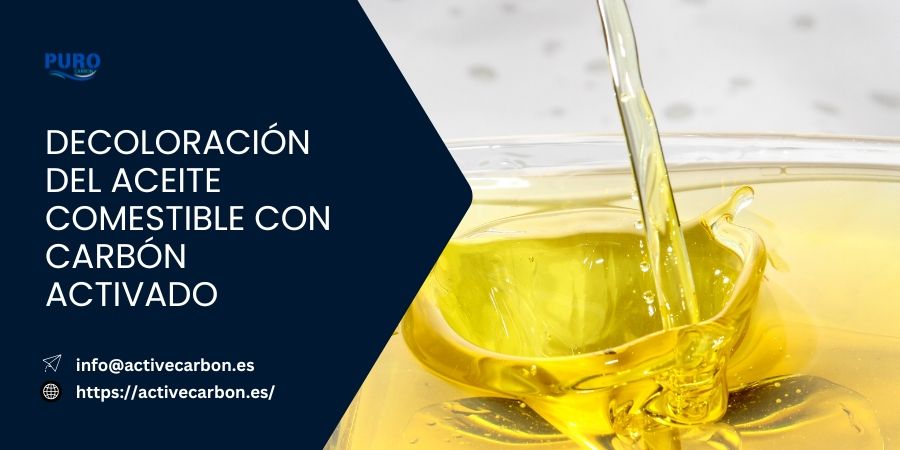
Edible oils are an essential component in the human diet. However, these oils often contain impurities, pigments, and undesirable compounds that negatively affect their appearance, flavor, stability, and nutritional value.
The activated carbon, as a highly efficient adsorbent material, is widely used in the edible oil refining process. This article will explore in depth the role of activated carbon in the decolorization of edible oils, helping you choose the most suitable activated carbon product.
Why is it necessary to decolorize edible oils?

Crude vegetable oils, such as soybean, palm, sunflower, rapeseed and olive oil, naturally contain various pigments that give them their characteristic color. These pigments mainly include chlorophyll (green), carotenoids (yellow-orange), and gossypol in cottonseed oil. Although these compounds are not necessarily harmful, their presence can negatively affect several aspects of the oil:
- Oxidative stability: Many pigments, especially chlorophyll, act as photosensitizers, accelerating oxidation reactions when the oil is exposed to light, significantly reducing its shelf life.
- Removal of contaminants: The bleaching process not only removes pigments, but also other undesirable compounds such as heavy metals, pesticide residues, oxidation products and toxic compounds such as polycyclic aromatic hydrocarbons (PAHs).
- Improved appearance: Decolorized oils usually have a pale yellow or colorless transparent color, more in line with market and consumer expectations.
In the modern food industry, with increasingly strict quality standards, efficient decolorization has become an essential step to ensure the production of oils that meet market expectations and food safety regulations.
Decolorization principle with activated carbon
The principle of activated carbon for edible oil decolorization is mainly based on physical and chemical adsorption, combined with its developed pore structure and surface chemical characteristics, achieving effective removal of pigments and impurities in oils. The specific principles are:
Physical adsorption
Activated carbon has a high surface area and a rich pore structure, capable of adsorbing through Van der Waals forces large molecules of pigments and impurities in edible oils, such as chlorophyll, carotenoids and oxidation products. These pigments are usually the main factors causing dark color and quality deterioration in oils.
Chemical adsorption
The surface of activated carbon contains functional groups such as carboxyls, phenolic hydroxyls and quinones, these active groups can chemically interact with certain polar impurities (such as free fatty acids, oxidation products, metal ions, etc.), improving the adsorption effect.
Advantages of activated carbon over other bleaching methods

In the edible oil refining industry, there are various bleaching methods, mainly bleaching earths (activated clays) and activated carbon. Although both have their place in industry, activated carbon offers significant advantages in many applications:
Increased adsorption capacity
Activated carbon has greater adsorption capacity for certain types of pigments and contaminants, especially for high molecular weight compounds and aromatic structures. This feature makes it particularly effective in removing:
- Difficult pigments such as chlorophyll and pheophytin
- Polycyclic aromatic hydrocarbons (HAP)
- Dioxins and similar compounds
- Pesticide residues
- Secondary oxidation products
Versatility in specific applications
Activated carbon stands out especially when the following characteristics are required:
- Selective elimination of toxic compounds such as benzopyrene
- Treatment of difficult oils, such as oils used in regeneration processes
- Reduction of undesirable odors and flavors
- Treatment of oils with a high degree of oxidation or contamination
Positive impact on the final quality of the product
In addition to improving visual appearance, activated carbon treatment contributes to:
- Improve oxidative stability and extend shelf life
- Improve sensory characteristics (reduction of undesirable flavors and odors)
- Reduce compounds that could cause problems in downstream processes
Types of activated carbon for decolorization of edible oils

Powdered Activated Carbon
Designed for the food and beverage industry, it meets food quality standards. It is supplied in large quantities and offered at factory prices.
Choosing the right activated carbon is crucial for the effectiveness of edible oil decolorization. Powdered activated carbon excels in decolorizing edible oils thanks to its unique advantages. Our powdered activated carbon meets food grade standards and is designed for food and beverage applications. It has the following characteristics:
- High specific surface area: Extremely fine particles provide a larger contact surface, effectively adsorb pigments and impurities in edible oil and improve the decolorizing effect.
- Exexcellent adsorption performance: It can quickly adsorb free fatty acids, oxides and other harmful substances in the oil to improve the quality of the oil.
- Food quality standard- Strict production quality control to ensure non-toxic and harmful, in accordance with food safety requirements.
- High adaptability to the process: Can be mixed directly with edible oil, applicable to intermittent or continuous decolorization process to meet different production requirements.
Conclusion
Activated carbon decolorization technology is an important part of the production process of high-quality edible oils. By choosing the right activated carbon product, the quality of the oil can be significantly improved.
PuroCarbon S.L., with years of experience in the activated carbon industry, is specialized in the design of activated carbon for each type of oil and application.
Do you want to improve your oil decolorization process? Get in contact with us today for a personalized consultation and get a tailored solution for your cooking oil decolorization.