Activated Carbon for H2S Removal in Wastewater Pumping Stations
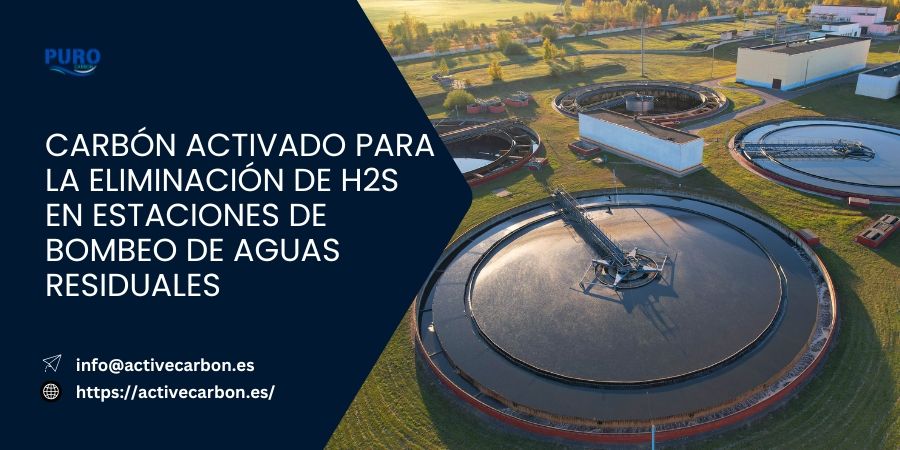
Hydrogen sulfide (H2S) is a common problem in wastewater pumping stations. This gas not only affects the performance and life of equipment, but also has a serious impact on the environment and air quality.
The activated carbon, as an effective method to remove H2S, has demonstrated outstanding capability in gas control in wastewater pumping stations. This article focuses on the role, advantages and how to select the right activated carbon for sewage pumping stations, providing you with a professional solution.
Dangers of Good H2S at Wastewater Pumping Stations
H2S is mainly generated by the decomposition of organic matter under anaerobic conditions. At wastewater pumping stations, the main sources of hydrogen sulfide include:
- Urban wastewater treatment systems
- industrial wastewater
- Sewer networks with high concentration of organic matter
- Wastewater treatment tanks and pumping stations
In these environments, H2S concentration can reach hundreds or even thousands of ppm, putting the health of operators and the safety of equipment at risk. Therefore, an efficient, economical and sustainable solution is imperative to address this problem.
The Role of Activated Carbon in H2S Removal
Activated carbon is a highly efficient adsorption material, whose microporous structure and high surface area allow it to capture and eliminate H2S molecules present in the air. The H2S removal process with activated carbon includes the following mechanisms:
- Physical adsorption: The micropores of activated carbon capture H2S molecules in the air, reducing their concentration in the environment.
- Chemical reaction: Some specific types of activated carbon (such as impregnated activated carbon) contain chemical agents on their surface that react with H2S, transforming it into non-toxic elements such as sulfur or sulfate.
Through these two mechanisms, activated carbon effectively removes H2S in wastewater pumping stations, improving air quality and protecting equipment.
Types of Activated Carbon for H2S Removal
| Parameter | Granular activated carbon | Impregnated activated carbon |
|---|---|---|
| Adsorption mechanism | Physical adsorption | Chemical adsorption + conversion |
| H2S concentration | Low-medium | High |
| Humidity adaptation | Moderate | High |
| Regeneration capacity | Regenerable | Non-regenerable |
| Treatment efficiency | Moderate | High |
| Applications | Airflow filtration and odor control | High H2S concentrations and humid environments |
| Cost | Low (regenerable) | Taller (disposable) |
Choosing the right activated carbon is key to ensuring effectiveness in H2S removal. The most common types used in wastewater pumping stations are:
Granular activated carbon

Granular activated carbon for H2S Removal
We offer high quality granular activated carbon for H2S removal, which is mechanically strong and especially suitable for high flow rates.
The Granular activated carbon, specifically designed for H2S removal, has high adsorption performance, larger grain size and low airflow resistance. It is ideal for the removal of H2S in low and medium concentrations. Its features include:
- High mechanical strength
- Low pressure drop
- Suitable for high flow volumes
- Relatively low regeneration costs
Impregnated activated carbon

Impregnated Activated Carbon for H2S Removal
Designed to remove H2S from wastewater pumping stations, high hardness, high adsorption, factory price.
The Impregnated activated carbon It is manufactured by incorporating chemical agents (such as KI, KOH or NaOH) into the base carbon. Its high chemical activity makes it an ideal solution for the removal of H2S in high concentrations. It can convert H2S into non-toxic elements such as sulfur or sulfates, completely eliminating the problem and preventing its re-emission. Its features include:
- High adsorption capacity
- High selectivity
- Excellent chemical conversion capacity
- Outstanding performance on specific contaminants
Conclusion
Hydrogen sulfide (H2S) is a widespread problem in wastewater pumping stations. Their odors, toxicity and corrosive capacity pose multiple challenges to the environment and equipment. However, activated carbon is an efficient and sustainable solution that significantly improves air quality, protects equipment and reduces maintenance costs.
If you are looking for a reliable H2S removal solution, please feel free to contact contact with our technical team to obtain professional advice.